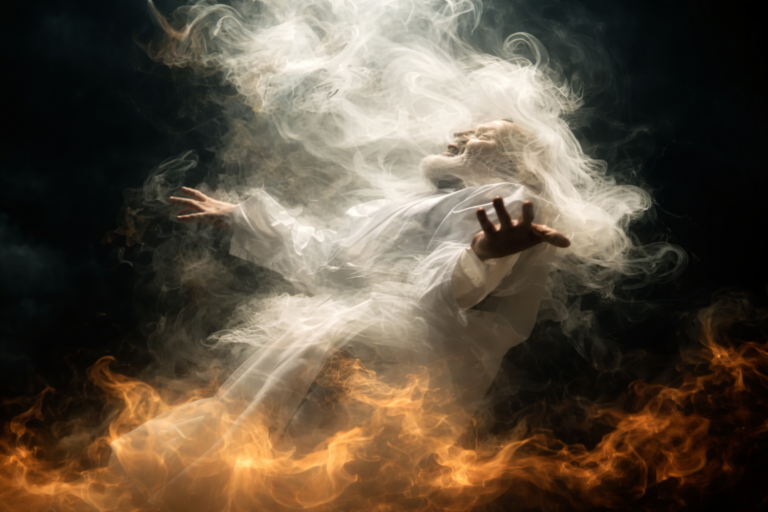
There are moments in Scripture when heaven interrupts earth so powerfully that human strength simply gives way. One of those extraordinary moments occurred during the dedication of Solomon’s Temple. After years of construction, planning, and careful obedience to divine instruction, King Solomon finally brought the Ark of the Covenant into its resting place. What happened next was so overwhelming that the priests could no longer remain standing.
But why?
Was it emotion? Fear? Physical exhaustion?
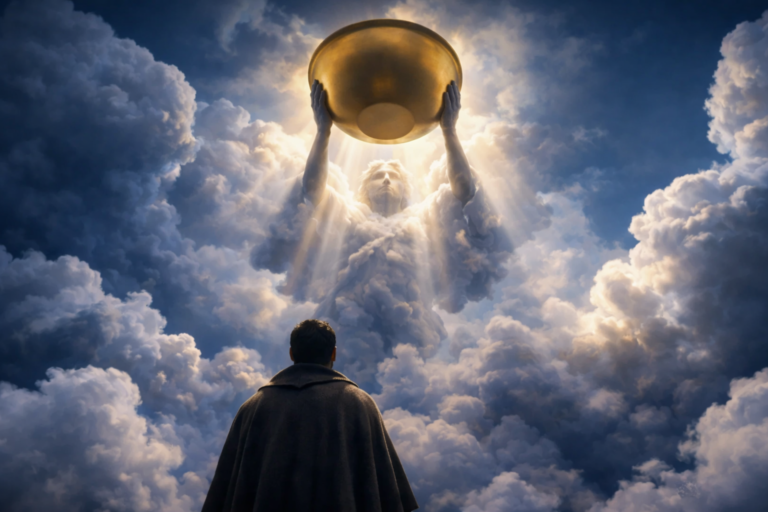
The biblical account suggests something far deeper. It was the manifest presence of God — described as His glory — filling the Temple with such intensity that human effort became irrelevant.
Let’s explore what truly happened and what it means for us today.
The Dedication of the Temple: A Defining Moment
The Temple in Jerusalem represented more than architecture. It symbolized covenant, worship, sacrifice, and God’s dwelling among His people. When the Ark of the Covenant was placed inside the Most Holy Place, musicians and priests united in praise. Trumpets sounded. Voices rose together “as one.”
Then something unexpected occurred.
A cloud filled the Temple — not ordinary smoke, but what Scripture describes as the glory of the Lord. The presence was so overwhelming that the priests could not continue ministering. They physically could not stand.
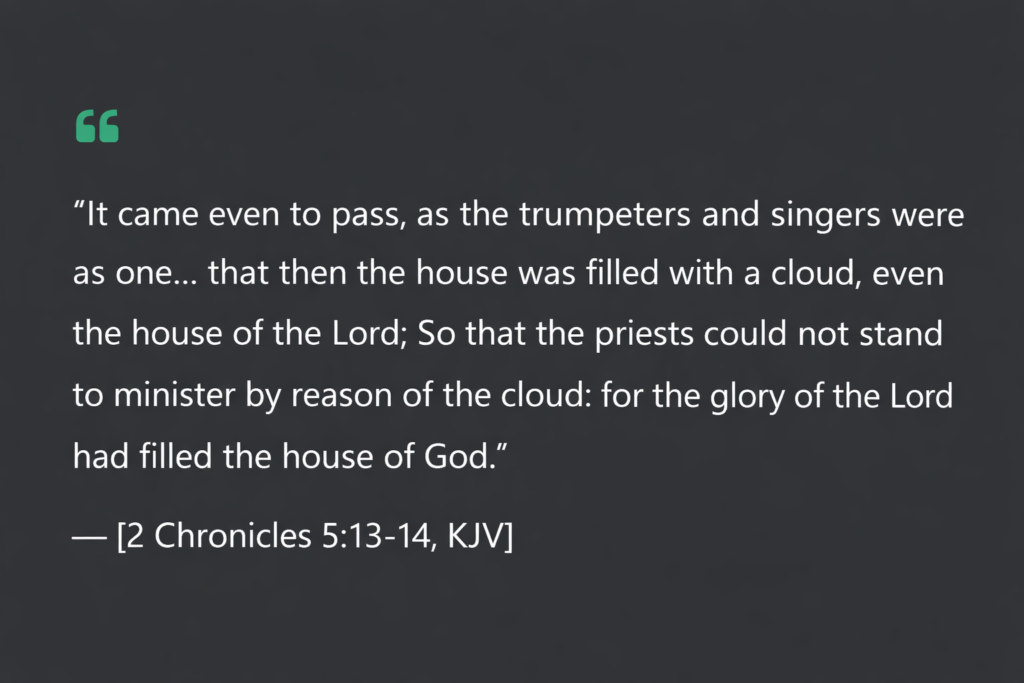
The priests stopped working — not because they failed — but because God took over.
What Was the “Glory” That Filled the Temple?
In the Old Testament, God’s glory is often associated with visible manifestations — fire, cloud, radiance, or overwhelming brightness. The Hebrew concept of glory carries the meaning of “weight” or “heaviness.” It conveys significance, substance, and authority.
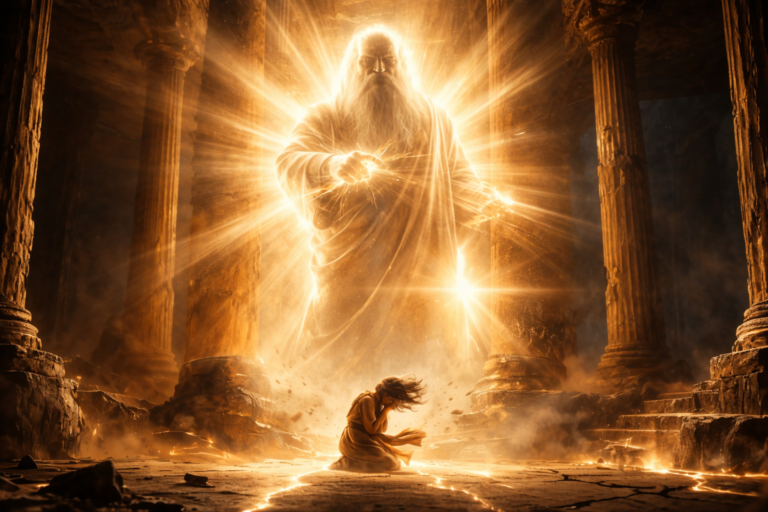
When Scripture says the priests could not stand, it is not suggesting chaos or panic. It indicates that the intensity of divine presence was so profound that human strength was insufficient to function normally.
This wasn’t emotional hype. It wasn’t music-induced enthusiasm. It was a tangible encounter with the holiness of God.
Throughout Scripture, similar responses occur:
- Moses removed his sandals at the burning bush.
- Isaiah fell undone in the Temple vision.
- Ezekiel collapsed before the glory of the Lord.
- John fell as though dead in Revelation.
When finite humanity encounters infinite holiness, physical weakness is a common reaction.
Why Couldn’t the Priests Continue Their Duties?
The priests were trained professionals. Their lives were dedicated to ritual, order, and sacred responsibility. They were accustomed to standing for long hours during worship and sacrifice.
So why stop now?
Because this moment revealed something essential:
1. God Is Not Managed by Ritual
The Temple had structure. Worship had protocol. Sacrifices had timing. But the arrival of God’s glory disrupted routine.
It demonstrated that worship is not about human control — it is about divine sovereignty. The priests were not hosting God; God was claiming His dwelling.
When the Creator fills the space, human systems pause.
2. Unity Precedes Manifestation
Scripture notes that the singers and musicians were unified “as one.” Harmony in worship preceded the cloud.
Unity is powerful. When hearts align in sincere worship, Scripture repeatedly shows that God responds.
The moment the people stopped focusing on themselves and collectively exalted God, heaven responded.
3. Human Effort Has Limits
The dedication of the Temple represented years of labor. Solomon’s leadership, skilled craftsmen, wealth, and planning all contributed to its completion.
Yet the defining moment was not the building — it was the filling.
The priests losing their ability to stand was symbolic. It revealed that no matter how impressive human achievement may be, it remains incomplete without God’s presence.
Was It Fear?
The text does not indicate terror. Instead, it describes awe.
Biblical fear of the Lord is not panic; it is reverence — a profound awareness of divine holiness. The priests were not running away. They were overwhelmed.
When the weight of glory filled the Temple, their role shifted from active service to humble surrender.
Sometimes the most powerful worship is not what we do, but what we cease doing.
The Difference Between God Visiting and God Dwelling
In earlier biblical moments, God “visited” — appearing temporarily through fire, cloud, or angelic encounter.
But the Temple dedication marked something deeper. It symbolized God choosing to dwell among His people.
There is a difference between an occasional experience and an established habitation.
The priests could not stand because the atmosphere changed from ceremony to occupancy.
God was not attending the dedication. He was taking residence.
What Does This Mean for Us Today?
This event is more than ancient history. It reveals timeless spiritual principles.
When Presence Replaces Performance
Modern life often revolves around performance — productivity, success, and constant motion. The Temple story challenges that mindset.
The priests stopped working when God filled the room.
It teaches that spiritual vitality does not come from striving harder but from aligning with divine presence.
Surrender Is Not Weakness
The priests losing their strength was not failure. It was acknowledgment that God’s glory surpasses human capacity.
In a culture that values self-sufficiency, this moment reminds us that true strength begins with surrender.
Worship Is About Encounter
Music alone did not cause the cloud. The unity and focus of worship prepared the environment.
Authentic worship invites encounter. When hearts are aligned and God is exalted above ego, something shifts.
The Symbolism of Standing and Falling
Standing often represents readiness and authority. Falling or bowing represents humility and reverence.
When the priests could not stand, it symbolized the transition from human authority to divine supremacy.
It was a visual proclamation: God reigns here.
The Temple was not a monument to Solomon’s success. It was a dwelling for God’s glory.
A Lesson in Letting Go
Perhaps the most profound takeaway is this: sometimes God’s greatest work happens when we stop trying to manage everything.
The priests prepared the space, positioned the Ark, and unified in worship. After that, they could do nothing more.
And that was enough.
The filling was God’s responsibility.
There are seasons in life where we build, plan, and work diligently. But there are also moments when we must step back and allow God to fill what we have prepared.
Conclusion: Why They Could Not Stand
So why did the priests lose their balance?
- Not because of music.
- Not because of weakness.
- Not because of fear.
They could not stand because the glory of the Lord filled the Temple.
It was the overwhelming weight of divine presence — a reminder that God is not merely observed or discussed. He is experienced.
The dedication of Solomon’s Temple teaches that when heaven touches earth, human effort pauses. In that sacred pause, we discover something greater than ritual, achievement, or structure.
We discover dwelling.
And sometimes, the holiest response is simply to bow.
About the Author