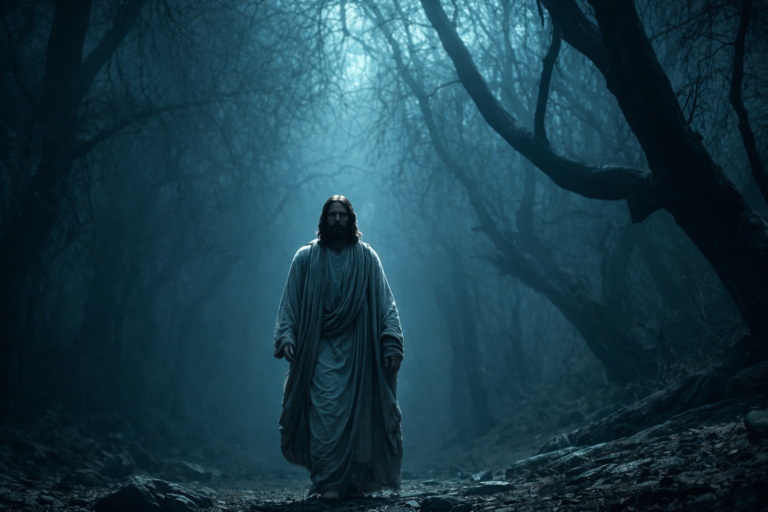
The Garden of Gethsemane was thick with tension, the air heavy with earth and anticipation. Suddenly, the stillness broke with the sound of an armed mob approaching, their torches and swords casting flickering shadows. Amid the chaos, Peter—overcome by fear and a need to defend his Lord—struck with his sword. The blade cut through the air, severing the ear of Malchus, the High Priest’s servant. Blood spilled, and soldiers pointed their spears at Peter, ready to strike. But before they could act, a Sovereign Presence intervened, taking control.
In my own experiences navigating the high-pressure world of international business, I’ve encountered many “Peter moments.” I’ve built brands like Gentleagu and SERISIMPLE and sat in boardrooms where an attack on my reputation made me want to fight back, perhaps with legal threats or other aggressive measures. It’s easy to think that “winning” means striking back harder. But as we’ve seen in our exploration of “Did Jesus Really Walk on Water? The Proof of His Divine Power,” true strength doesn’t come from causing harm. Instead, it lies in the power to heal, even when you’re under attack.
The miracle in the Garden of Gethsemane goes beyond restoring an ear; it demonstrates that the Kingdom of God operates on a far higher level than human retaliation.
The Miracle: Jesus Heals His Captor’s Servant
The Power of Touch: “And He Touched His Ear”
Instead of retreating from Peter’s violence, Jesus stepped forward, placing Himself between His disciple and the armed mob. With a command that turned the situation upside down, He said, “Put away your sword.” Then, with extraordinary mercy, He reached out to the very man who had come to arrest Him, and touched Malchus’s ear, instantly restoring it. This miraculous act not only saved Peter’s life but also revealed the emptiness of the weapons wielded by the mob.
Why Did Jesus Heal Malchus?
The Path to Peace: By healing Malchus, Jesus showed that His mission wasn’t to harm but to restore. He removed the evidence that could have led to Peter’s execution as a rebel.
The Strength of Surrender: Jesus made it clear that His capture wasn’t because of weakness, but because of His willingness. He could have easily healed Malchus’s ear while maintaining His own freedom, demonstrating that His surrender was a deliberate act of love.
Rising Above Resentment: The miracle struck at the heart of the mob’s hatred, showing that Kingdom Productivity is not about revenge, but about restoration, even in the face of hostility.
This focused grace mirrors what we discuss in “Whose Name Was the First Ever Spoken by an Angel?” where we see God’s priorities often lie with the hearts of those who stand against Him.
The Meaning: Three Profound Truths About the “Final Healing”
When we look deeper into the mysteries of Scripture, we realize that Jesus’s healing of Malchus was not just an act of compassion but a profound statement about His Kingdom.
1. The End of Physical Violence
This healing marked Jesus’s final physical miracle before His crucifixion. He demonstrated that His Kingdom would be founded on loving one’s enemies, not killing them
2.The Sovereignty of the Servant
Malchus, a mere servant, was not ignored. God showed that He values the individual, even the “lowly,” not just those in positions of power. (For more on this, see “Why Would a Great Fish Become a Man’s Salvation?” where God uses the “low” to teach profound truths.)
3. The Power of Silence as Witness
After the ear was restored, the mob became strangely quiet. For more on how God works through your response to conflict, read about His divine process of restoration.
The Application: How to Manage Your “Swords” in 2026
As an entrepreneur, I recall a time when my brand, Yarniss, was betrayed by a partner who tried to sabotage our growth through a bad contract. I felt the urge to fight back with anger and threats, to damage their reputation in return. It was tempting to retaliate in kind.
But through this experience, I realized that true Kingdom work is about healing relationships, even when you have every right to strike back. As we discuss in “The Meaning of ‘Selah’ in the Psalms,” the power to pause in the midst of conflict is where we find true strength. Instead of lashing out, I chose to focus on restoring the situation, just as Jesus healed Malchus. This approach led to the miraculous restoration of my business’s path.
For more insights on how God’s peace works even in difficult situations, read “Why Did Jesus Fold the Napkin in the Tomb?”
The Promise: His Love Is Greater Than the Battle
In our Daily Bible Verse and Prayer Guide, we are reminded that Jesus’s love extends even to the most challenging circumstances. He isn’t seeking “warriors” who act in their own strength; He is looking for hearts willing to surrender their swords. If your life has felt like a series of battles, remember Gethsemane. Jesus has the strength to heal the wounds, no matter how deep.
Conclusion: Heal My Heart
Why did Jesus heal Malchus? It wasn’t just about his ear; it was about setting an example for the world. Jesus saw beyond the “enemy” and recognized the need for salvation in everyone, even those who sought to capture Him. By healing Malchus, He showed that His love is the ultimate weapon—the only one that never fails.
If you believe His love is greater than any battle you are facing today, and you are ready to let go of your sword and embrace His healing touch, type “Amen” and declare: “Heal my heart.” Stop focusing on the conflict and start focusing on the One who touches your wounds.
What’s the “sword” you’ve been carrying—anger, bitterness, or the desire for revenge? Are you ready to let the Lord heal the situation instead of striking back? Share your prayer for a healed heart below.
About the Author