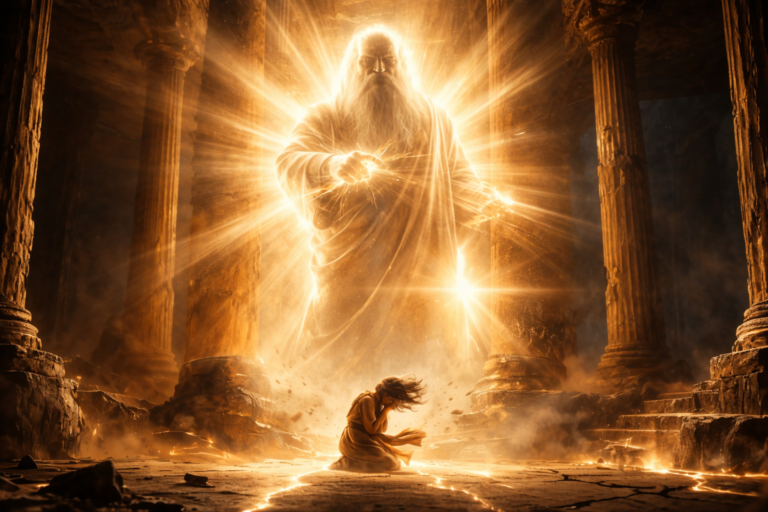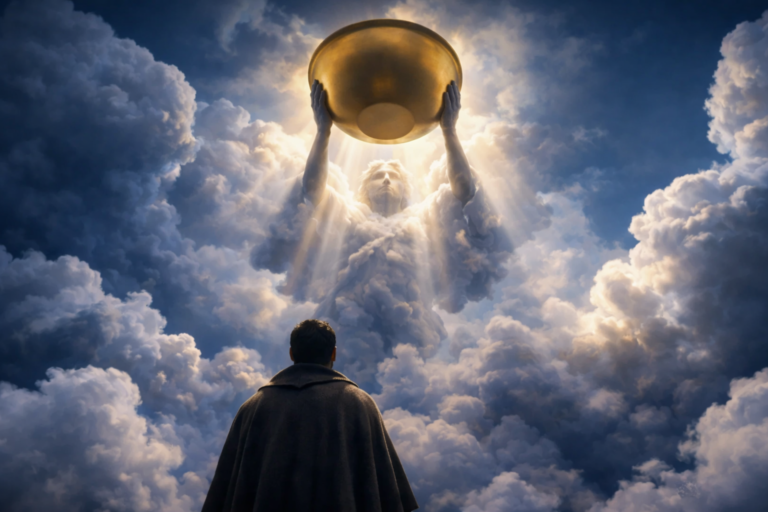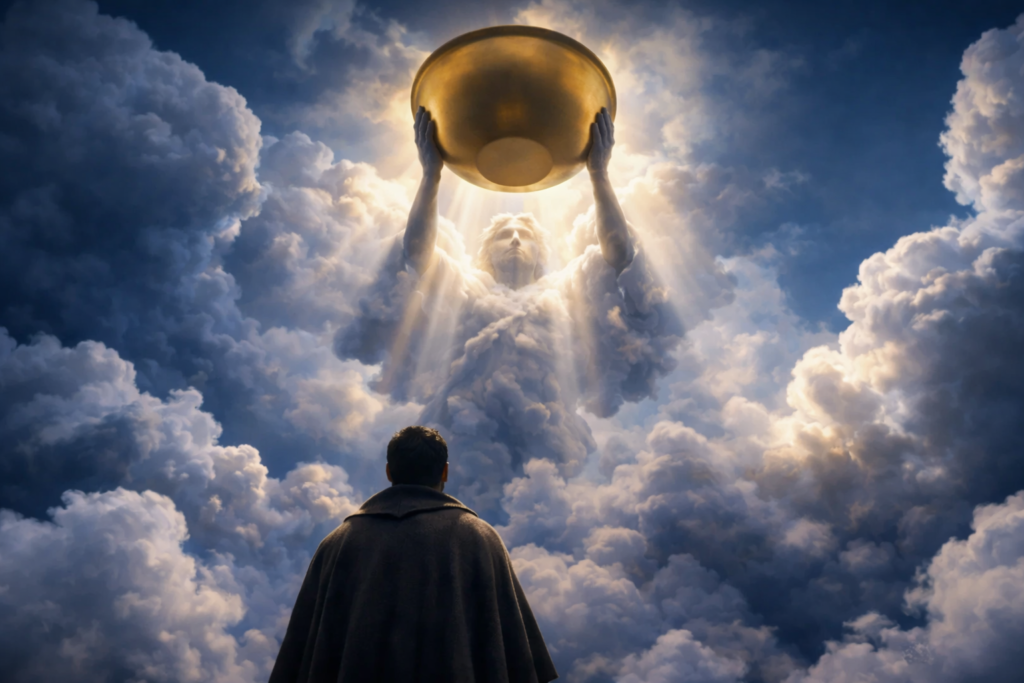
Few moments in Scripture are as dramatic and mysterious as the scene described in Revelation 8. The Apostle John witnesses something astonishing: heaven falls silent. Then an angel offers incense mixed with the prayers of believers. Finally, that same angel fills a golden censer with fire from the altar and throws it toward the earth — and thunder roars, lightning flashes, and the ground shakes.
What does this mean? Why would heaven respond to prayer with fire and earthquake?
To understand the meaning, we need to look closely at what John saw.
The Silence of Heaven: A Moment of Attention
Revelation 8 opens with an unusual detail: there was silence in heaven for about half an hour.
Heaven is often depicted as vibrant—alive with worship, motion, and proclamation. Yet here, all activity comes to a halt.
Silence in Scripture frequently signifies reverence, anticipation, or judgment. It is not emptiness but intense focus. This stillness indicates that something significant is about to occur.
In this vision, heaven is not indifferent. It is attentive.
Before any trumpet sounds, before any judgment proceeds, there is a pause. That pause centers on prayer.
The Golden Altar and the Prayers of the Saints
John sees an angel standing at the altar with a golden censer. Incense is added to the prayers of all the saints, and the smoke rises before God.
This imagery connects to Old Testament temple worship. In the Tabernacle and later in the Temple, incense symbolized prayer ascending to God (Psalm 141:2). The sweet aroma represented devotion and supplication.
In Revelation, this symbolism takes on greater meaning. The prayers are not lost or overlooked; they are carefully collected, preserved, and brought intentionally before the throne.
This is a powerful theological statement: heaven records the cries of God’s people.
Every whispered plea.
Every silent tear.
Every desperate petition.
None are lost.
Why a Golden Bowl?
Gold in biblical imagery often represents purity, value, and divine authority. The use of a golden censer emphasizes the precious nature of what it contains.
Prayer is never taken lightly in heaven; it is approached with deep reverence.
The vision reveals that prayer is more than just human emotion expressed outwardly. It becomes an integral part of God’s redemptive work.
The golden vessel underscores that what seems fragile on earth is honored in eternity.
The Fire from the Altar
After the incense rises, the angel fills the censer with fire from the altar and casts it to the earth.
This is the turning point.
The altar symbolizes sacrifice and sacredness. Fire frequently represents divine presence, purification, or judgment. When fire is cast toward the earth, it signifies that something is being set into motion.
The sequence is important:
- Prayers ascend.
- Fire is added.
- The fire returns to earth.
This suggests that prayer is not passive. It participates in divine action.
Thunder, Lightning, and Earthquake
The immediate result of the thrown censer is dramatic: voices, thunder, lightning, and an earthquake.
Throughout Scripture, these signs accompany divine intervention. At Mount Sinai, thunder and lightning marked God’s presence (Exodus 19). Earthquakes often signal significant spiritual events.
In Revelation, these phenomena indicate that heaven is responding decisively.
The message is not that prayer causes chaos randomly, but that prayer aligns with God’s purposes — and when He acts, the effects are powerful.
What Was John Being Shown?
John was not merely observing ritual. He was being shown the connection between earthly suffering and heavenly justice.
Revelation was written to believers facing persecution. Many had prayed for relief, for vindication, for God’s kingdom to come.
The vision assures them:
Your prayers are not ignored.
They are part of the unfolding plan.
The fire thrown to earth symbolizes God’s response — sometimes through judgment, sometimes through deliverance, but always through sovereign authority.
The Meaning Behind the Symbolism
Several key themes emerge from this scene:
1. Prayer Precedes Action
Before the trumpets of judgment sound, heaven pauses for prayer.
This ordering matters. It shows that divine action is not arbitrary. It unfolds in relationship to the cries of God’s people.
Prayer does not manipulate God, but it participates in His will.
2. Silence Is Not Absence
The thirty minutes of silence might feel unsettling. But the silence is not neglect — it is preparation.
In seasons when prayers seem unanswered, Revelation 8 reminds believers that heaven may be in the pause before the response.
Silence can precede power.
3. What Goes Up Comes Down
The imagery of incense rising and fire descending suggests a holy exchange.
Human weakness rises as prayer.
Divine power descends as response.
The direction changes, but the connection remains.
Is This About Judgment or Deliverance?
Revelation contains both judgment and hope. The fire from the altar triggers events associated with the trumpet judgments.
However, for persecuted believers, judgment upon evil was itself a form of deliverance.
The thrown censer demonstrates that God does not ignore injustice. He hears. He remembers. He acts at the appointed time.
For those aligned with Him, this is reassurance, not terror.
What Does This Mean for Us Today?
Revelation 8 speaks to anyone who has prayed and wondered whether their words mattered.
Have you ever felt that your prayers vanish into silence?
Have you ever questioned whether heaven is listening?
John’s vision answers with powerful imagery:
- Your prayers rise.
- They are preserved.
- They are presented.
- They become part of God’s purposes.
Even when the response is delayed, it is not denied.
The Partnership Between Prayer and Sovereignty
The vision does not suggest that humans control divine outcomes. Rather, it reveals partnership.
God chooses to incorporate prayer into His redemptive work.
The golden censer is a symbol of that partnership — fragile human voices joining with divine fire.
When the bowl is thrown, it is not merely fire descending. It is heaven affirming that the cries of the faithful have been heard.
Conclusion: Why the Angel Threw the Bowl
So why did Apostle John see an angel hurl a golden bowl of fire?
- Because prayer moves history.
- Because silence precedes action.
- Because heaven honors the voices of the faithful.
- Because divine justice unfolds in response to real petitions.
The image is not meant to frighten without context. It is meant to strengthen believers facing delay and difficulty.
The silence in heaven was not emptiness — it was attention.
The fire was not random — it was response.
And the earthquake was not chaos — it was the visible sign that heaven had moved.
Revelation 8 ultimately declares this truth:
When God’s people pray, heaven listens — and at the right time, heaven acts.
About the Author