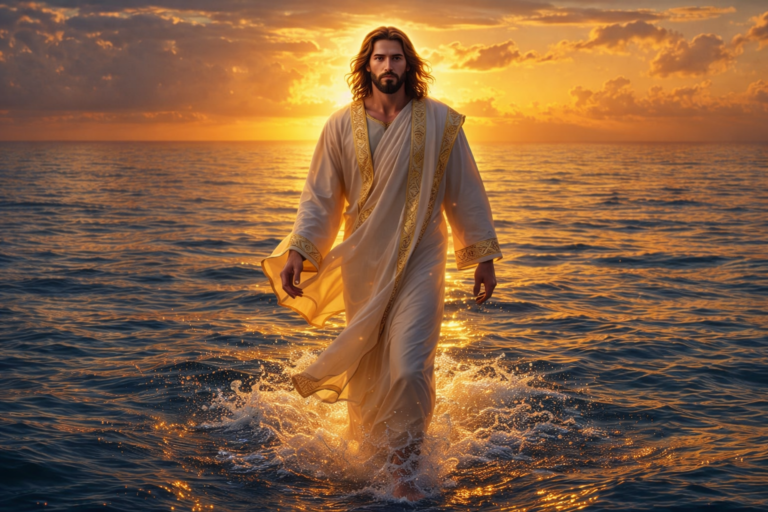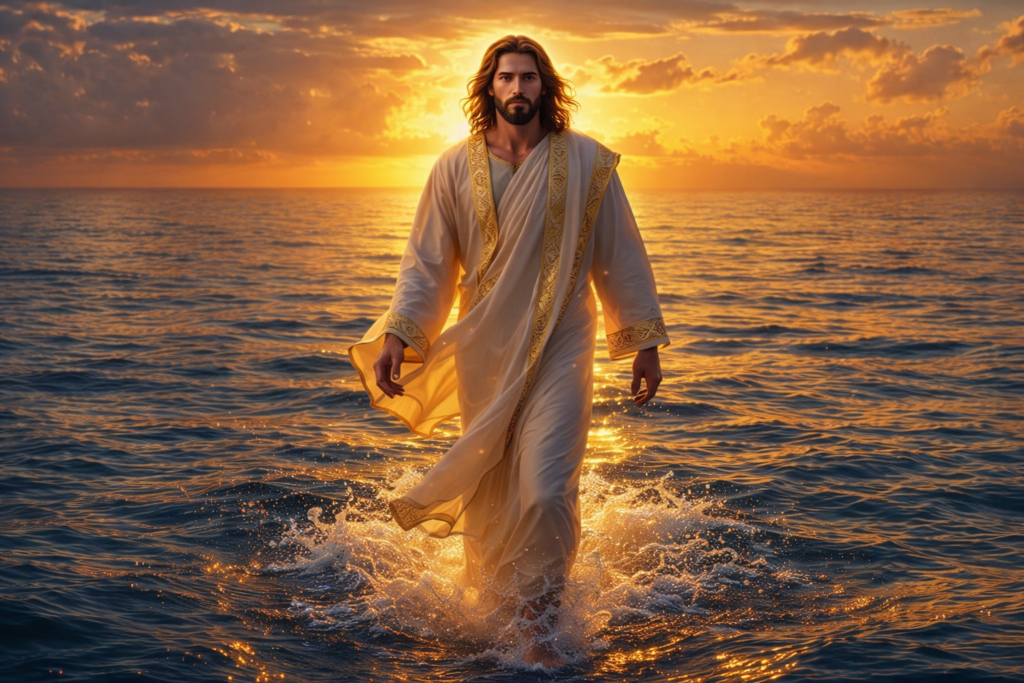
When the Laws of Nature Are Overcome: The Miracle of the Fourth Watch
ver felt so tired that your mind starts playing tricks on you?
Imagine rowing a heavy boat across the water for hours on end—your muscles aching, the wind howling, and the waves crashing relentlessly around you, yet you seem no closer to your destination.
This was the struggle the disciples faced in Matthew 14. They were stranded in the middle of the Sea of Galilee at around 3 AM (the “fourth watch”), wet, terrified, and disheartened.
Then, from the darkness, they saw a figure moving over the water. Rather than recognizing it as something divine, their first reaction was fear—they thought it was a ghost.
Part I: The Significance of Jesus’ Walk on Water
“He Who Walks on the Waves”
To modern eyes, walking on water might seem like something from a superhero story. However, to those in Jesus’ time, it carried deep meaning rooted in scripture.
In Job 9:8, God is described as the one who:
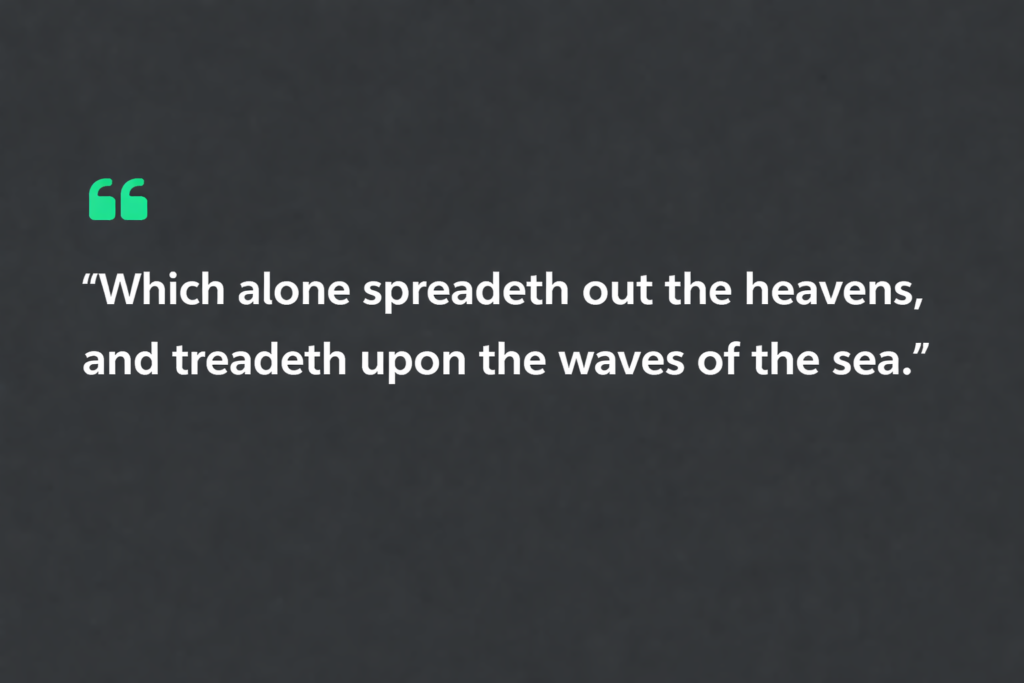
When Jesus walked on the water, He wasn’t merely performing a supernatural act; He was fulfilling a divine role—stepping into the identity of Yahweh, showing that He, too, was sovereign over nature.
The Divine Declaration in the Storm 🗣️
When the disciples were gripped by fear, Jesus immediately called out to them:

In Greek, Jesus’ words, “It is I,” are translated as “Ego Eimi,” which means “I AM”—the name of God revealed in Exodus 3:14. With this declaration, Jesus wasn’t just identifying Himself; He was proclaiming His divinity. In that moment, He assured them that the “I AM”—the eternal, self-existent God—was standing above the storm.
Part II: Peter’s Bold Act of Faith
The Only One to Walk with Jesus
Peter is often criticized for sinking, but he holds the remarkable distinction of being the only person, aside from Jesus, to walk on water.
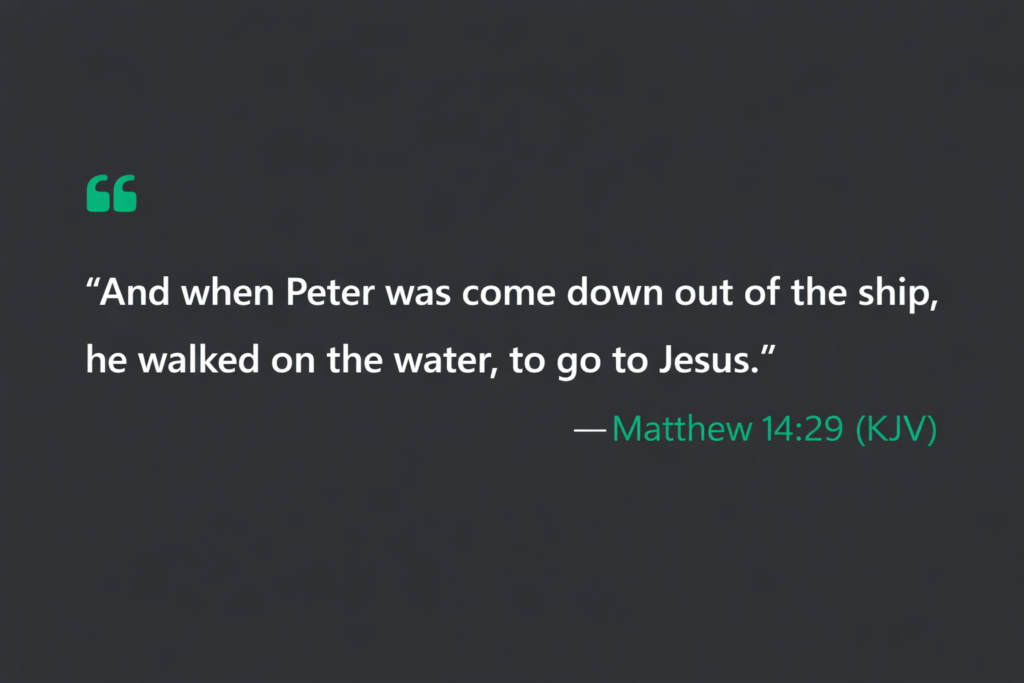
Peter’s downfall didn’t come because of the storm; it came when he shifted his focus.
As long as he kept his eyes on Jesus, he defied gravity and walked on water. But the moment he became distracted by the wind, he sank. This teaches us that faith isn’t about emotions—it’s about where we place our focus.
Part III: Debunking Common Myths About the Miracle
Myth 1: It was just a sandbar.
Some skeptics claim that Jesus walked on a sandbar or shallow water. However, the text clearly states that the disciples were “in the middle of the sea,” far from any shallow areas. The water was deep enough for Peter to drown, ruling out the sandbar theory.
Myth 2: Peter failed
Peter is often remembered for his lack of faith, but let’s not forget: there were 11 other disciples who didn’t even try to walk on the water. Peter showed immense courage by stepping out of the boat. His “failure” was a bold move of faith that surpassed the comfort of staying safe inside the boat.
Myth 3: It’s just a metaphor.
The Gospels recount this story as a literal event. The disciples’ reaction—worshipping Jesus and declaring, “Truly you are the Son of God” (v. 33)—only makes sense if the miracle actually occurred. They worshipped Him because, in that moment, the laws of physics had been broken.
Conclusion: The Storm Becomes Your Foundation
Why did Jesus walk on water? To show us that the very thing we fear can become the means by which He reaches us.
The waves that were about to overwhelm the disciples became the path for Jesus to walk toward them. He didn’t remove the storm instantly; He entered it with them.
If you’re in your own “fourth watch”—feeling exhausted, scared, and caught in a fierce battle—look up. The “ghost” you fear might just be the Savior you need.
Reflection: Are you focusing on the storm, or are you fixing your eyes on Jesus?
About the Author