The Symphony of Suffering: Why He Didn’t Call the Army
Have you ever been in a situation where the noise around you was so overwhelming that you couldn’t even think clearly? Whether it was the chaos of a crowd, the clamor of an argument, or the constant buzz of traffic, the sound can be deafening and unsettling.
Now, imagine this: that noise isn’t just overwhelming—it’s demanding your death.
On His way to Calvary, Jesus was surrounded by a wall of sound—the weeping of the women, the cursing of the soldiers, the mocking of the Pharisees. The street was alive with the noise of anger, hatred, and despair. But amidst this deafening roar, there was a sound Jesus didn’t make.
Though He had the power to summon 72,000 angels with a single command and destroy Jerusalem, He chose not to. Instead, Jesus chose to listen to a different sound—one that came from the future, a sound that would carry Him through the pain. This article explores the soundscape of the Passion and why Jesus chose to focus on love rather than power.
Part I: The Sounds of Human Weakness
The Snoring in the Garden
Before the chaos and clamor of the Via Dolorosa, there was a quiet that hurt more than anything else. In the Garden of Gethsemane, Jesus asked His closest friends—Peter, James, and John—to keep watch with Him, to stand by Him as He prayed through His agony. Yet, instead of being there for Him, He heard the rhythmic breathing of sleep.
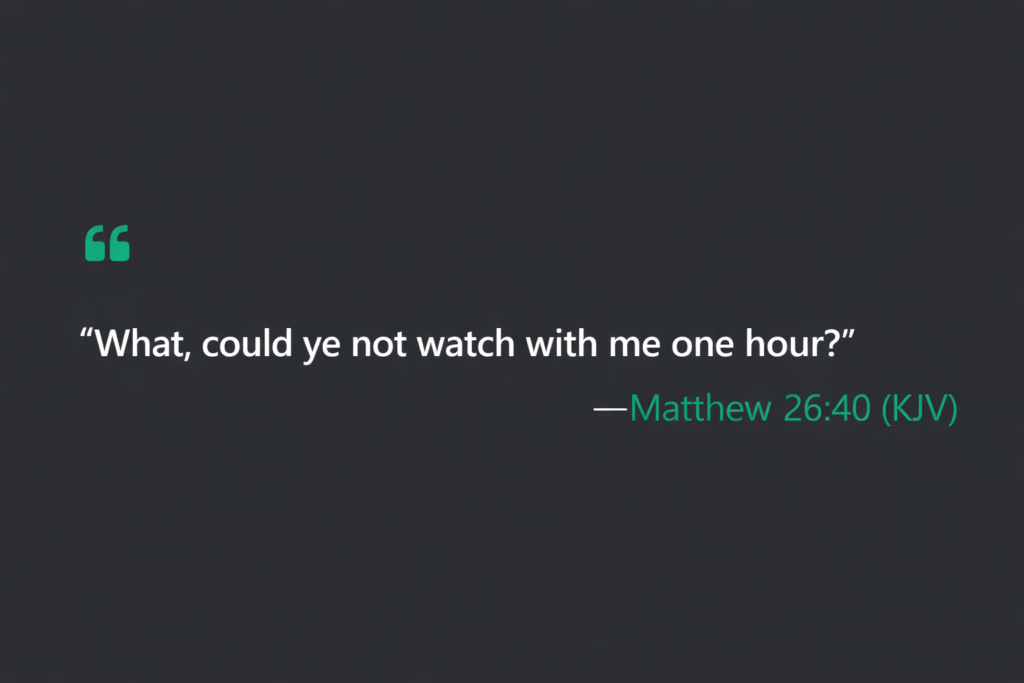
While Jesus was sweating blood, His disciples were asleep. This was a blow that no one could have prepared Him for—the realization that no one on earth could understand the weight He was carrying. He was completely alone in His mission to redeem humanity. Even the closest of friends couldn’t stay awake to offer Him support. In that moment, Jesus faced a loneliness that no one else would ever experience, a loneliness that continued to grow as He walked the road to the cross.
Part II: The Cry of Divine Separation
The Sound of the Psalm
The sounds of mockery and jeering began as the nails were driven into Jesus’ hands and feet. The crowd called out, “He saved others, but He cannot save Himself!” The noise intensified as the soldiers cast lots for His clothes, but the most profound and terrifying sound came from Jesus Himself.
“Eli, Eli, lama sabachthani? that is to say, My God, my God, why hast thou forsaken me?” —Matthew 27:46 (KJV)
This was not a cry of doubt but a fulfillment of Scripture. Jesus was quoting Psalm 22:1, one of the most profound expressions of human suffering and abandonment. For the first time in all eternity, the Father turned His face away from the Son because the sin of the world was placed upon Jesus. The “Silence of Heaven” became deafening in that moment. The deep pain of separation was far worse than the physical suffering He endured on the cross. Jesus was cut off from the fellowship He had always known with the Father, and in that moment, He felt the agony of what it means to be forsaken.
Part III: The Voice from the Future
The Joy Set Before Him
Hebrews 12:2 tells us that Jesus endured the cross “for the joy that was set before him.” But what joy was He thinking about? It wasn’t the joy of physical comfort or the end of His pain. The joy came from what His suffering would accomplish.
While the crowd screamed “Crucify Him,” Jesus wasn’t focused on the roar around Him. He was listening to a different sound, one that was not coming from the people shouting, but from the future. He heard the thief on the cross say, “Lord, remember me when thou comest into thy kingdom” (Luke 23:42).
He heard the Roman centurion exclaim, “Truly this man was the Son of God” (Mark 15:39).
He heard your voice, saying, “Jesus, forgive me.”
Jesus didn’t call the 72,000 angels because their intervention would have silenced your chance at salvation. He chose to allow His hands to be bound so that He could unbind your soul. The sound of mercy, of forgiveness, and of salvation was louder to Him than the sound of the mocking crowd.
Part IV: 3 Common Misconceptions About the Passion
Misconception 1: Jesus was a victim of the mob.
Correction: Jesus was not a helpless victim of the mob; He was the High Priest offering the ultimate sacrifice. He said, “No man taketh it [my life] from me, but I lay it down of myself” (John 10:18). He had the power to end the whole ordeal at any moment, but He chose to remain in control and fulfill God’s plan. Every moment of His suffering was voluntary.
Misconception 2: He couldn’t hear individual voices.
Correction: Even in the midst of His excruciating agony, Jesus was still able to hear the cry of a single individual—the repentant thief. He heard the thief’s plea for mercy, and He responded, “Today shalt thou be with me in paradise” (Luke 23:43). Jesus’ hearing is selective, and He listens for the voice of faith amidst the noise of the world.
Misconception 3: The “Forsaken” cry was Jesus doubting God.
Correction: As mentioned earlier, Jesus’ cry of “My God, my God, why hast thou forsaken me?” was not a moment of doubt. He was quoting from Psalm 22, expressing His identification with sinners who feel forsaken. Jesus’ words were a way of showing that He was taking our place in the darkness so that we could stand in the light.
Conclusion: He Is Listening for You Now
What did Jesus hear on the Via Dolorosa? He heard the cries of humanity—your cry for mercy, your plea for forgiveness, your need for redemption. And He chose to listen to those voices over the cries of the mob. He endured the suffering of the cross because He knew it was the only way to reconcile us to the Father.
Today, the Via Dolorosa is silent. The tomb is empty. But Jesus is still listening. He no longer listens to the mockers, but He listens for the sound of your heart opening to Him.
Reflection: If Jesus listened to your voice while He was dying, will you listen to His voice while you are living?
About the Author