Ancient Biblical Descriptions and Modern Space Images: A Thoughtful Exploration
This article is based on visual analysis, historical context, and interpretation of biblical texts. It is written for educational and discussion purposes and does not claim scientific or theological conclusions.
Introduction
What if some modern space images remind us of descriptions written thousands of years ago in ancient scriptures? Not as proof, but as a point of reflection.
In recent years, images released by space agencies such as NASA have allowed the public to see deep space in extraordinary detail. Nebulae, star remnants, and distant galaxies often appear unfamiliar — and sometimes visually striking in ways that invite interpretation.
Some viewers have noticed that certain formations in space appear to resemble imagery found in the Bible, particularly descriptions of heavenly beings. These observations are not presented as scientific claims, but as cultural and visual comparisons that raise interesting questions.
When Space Images Look Familiar
At first glance, many space photographs appear ordinary to the untrained eye — just clouds of gas, light, and dust formed by natural cosmic processes. Astronomers explain these images as the result of stars forming, collapsing, or releasing energy into space over vast periods of time.
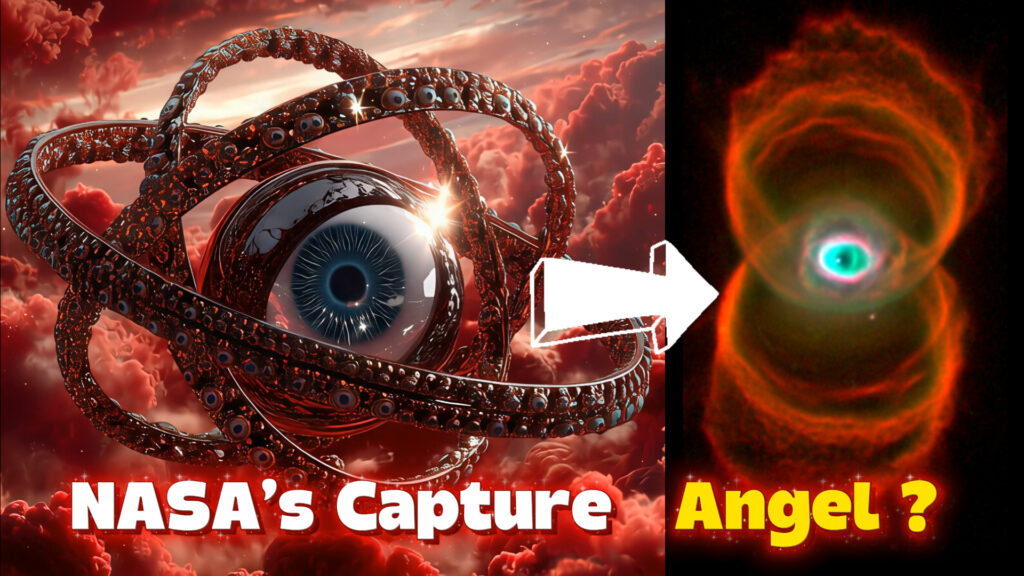
However, when people take a closer look, some notice shapes that appear unusually structured or symmetrical. In some cases, viewers describe these formations as resembling a large eye or circular form, seemingly staring back from the depths of space.
These impressions are subjective, but they highlight how the human brain naturally searches for patterns, especially when viewing unfamiliar environments.
Biblical Descriptions of Heavenly Beings
In the Book of Ezekiel, the prophet Ezekiel describes a vision involving extraordinary beings unlike traditional artistic images of angels. He writes of “wheels within wheels,” covered in eyes, moving in every direction without turning.
Most biblical scholars agree that Ezekiel was using symbolic and visionary language — common in ancient prophetic writing — to describe an overwhelming spiritual experience. The text does not present these descriptions as physical or scientific explanations, but as theological imagery meant to convey order, power, and divine presence.
Even so, the visual language Ezekiel used continues to stand out because of how unusual and specific it is.
Science, Symbolism, and Interpretation
Modern astronomy explains space phenomena through physics, mathematics, and observation. Nebulae and star remnants often form circular or layered shapes due to gravity, radiation, and motion. From a scientific perspective, these structures are natural and expected.
At the same time, ancient writers described the world using the language available to them. When modern readers notice visual similarities between ancient descriptions and modern images, it does not mean one proves the other. Instead, it reflects how humans across history have tried to understand things far greater than themselves.
The Role of the Ophanim in Scripture
The beings Ezekiel describes are often referred to as ophanim in later theological traditions. They are not portrayed as messengers or protectors of humans, but as beings associated with movement, order, and the throne of God.
According to traditional interpretations, the ophanim represent divine structure rather than personal interaction. Because of this, they are mentioned briefly and without extensive explanation, suggesting their role was beyond normal human comprehension.
These descriptions have fascinated readers for centuries, not because they offer clear answers, but because they challenge imagination and understanding.
Modern Questions, Ancient Texts
Today, reports of unidentified or unexplained objects in the sky are often discussed in scientific and media contexts. Most are eventually attributed to aircraft, atmospheric effects, or observational limitations. Still, the way these objects move or appear sometimes sparks curiosity and speculation.
This does not mean ancient texts were describing modern phenomena, nor does it mean modern observations confirm ancient visions. Instead, it shows how similar questions continue to arise as human knowledge expands.
A Reflection Rather Than a Conclusion
The Bible does not describe heaven as silent or static, but as active and ordered. Ezekiel’s vision fits within that theological framework, using symbolic language to communicate meaning rather than mechanics.
When modern technology reveals new images of the universe, it gives people an opportunity to reflect — not necessarily to prove belief, but to reconsider ancient texts with fresh eyes.
Rather than asking whether science disproves scripture, a more thoughtful question may be whether both are exploring reality from different perspectives.
Final Thoughts
These space images may simply be natural cosmic formations, explained fully by science. Or they may remind viewers of ancient descriptions because the human mind naturally connects patterns across time.
What matters most is not claiming certainty, but encouraging thoughtful discussion.
Are we simply observing dying stars?
Or are we seeing familiar patterns through modern tools?
The answer depends not on fear or speculation — but on careful study, reflection, and an openness to understanding both science and history.
Watch the Full Video
You can watch the full video with animations below, and you’re also welcome to visit my YouTube channel for more content like this.
About the Author